












































- What is the Zayed National Museum?
- Why the Museum Is Important for the UAE
- The Architecture Behind the Landmark
- What to See Inside Zayed National Museum
- Best Time to Visit the Museum
- How to Get to Zayed National Museum
- Why Renting a Car Is the Most Convenient Option
- Nearby Attractions Worth Visiting
- Visitor Tips Before You Go
- Final Thoughts
- FAQ
Zayed National Museum is the national museum of the UAE and one of Abu Dhabi’s most important cultural landmarks. It preserves the country’s rich history and honors the legacy of Zayed bin Sultan Al Nahyan. Inside, you can find immersive galleries, archaeological objects, maps, photos, drawings, films, and testimonies. For example, here you can see a reconstruction of a Bronze Age boat, the type of vessel that sailed the Arabian Gulf during the Umm an-Nar period (2500-2000 BCE). Despite the United Arab Emirates being established as a federation in 1971, human history in the region dates back more than 300,000 years. This museum tells the story of the nation from prehistoric times to the present. One of Sheikh Zayed’s most famous quotes is: “He who does not know his past cannot make the best of his present and future, for it is from the past that we learn.”
A visit to this museum will be interesting for children and adults, as well as for anyone interested in history, casual visitors, and experts in the field.
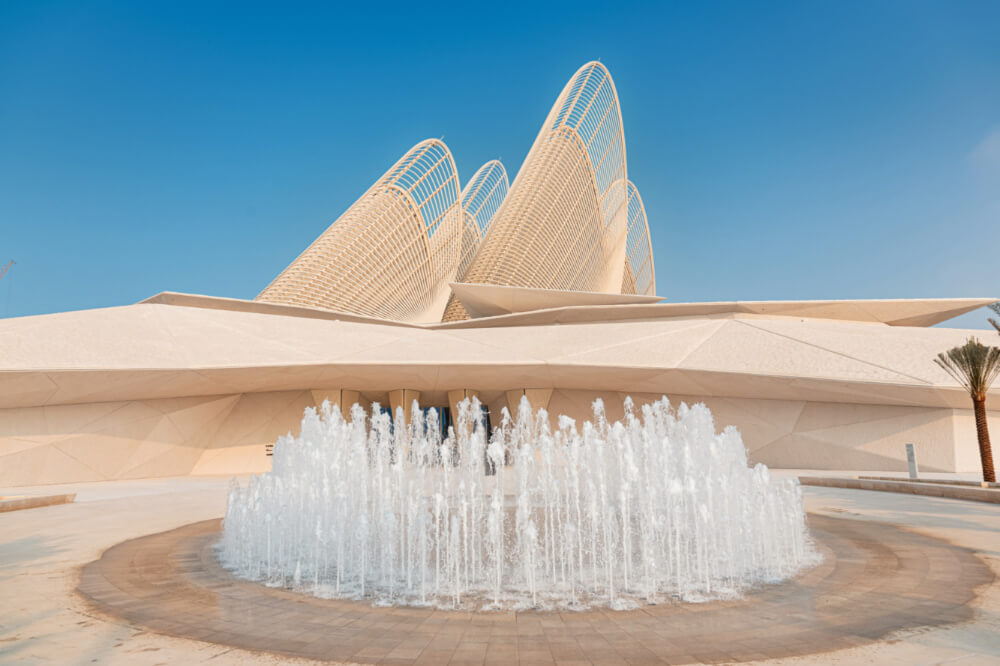
Before your visit, complete your booking online or choose a guided tour. The museum is located on Saadiyat Island. The operating hours are 10:00 am – 08:00 pm, but the best time to visit the museum is between 10:00 a.m. and 12:00 p.m., as during these hours there are no large afternoon school groups, no tour buses, and overall it is much calmer and crowd-free.
What is the Zayed National Museum?
Before we talk about what this museum is, let’s understand who Sheikh Zayed bin Sultan Al Nahyan is. He is considered the UAE’s founding father of the nation, and this museum honors his life, legacy, and values. Zayed National Museum celebrates UAE’s history and culture. In 1971, under the leadership of Sheikh Zayed, the scattered emirates united to form a single state, and he became its first president. The museum was originally designed as a monument and a living memorial in honor of this outstanding leader. Sheikh Zayed made an immense contribution to the preservation of cultural heritage by supporting archaeological excavations throughout the Emirates in the 1950s. He also founded the very first museum in Al Ain in 1971. Sheikh Zayed was a passionate enthusiast of traditional falconry, environmental conservation, and desert greening. The futuristic falcon-wing shape of the museum building reflects his interests. One of the key values he promoted was reverence and respect for the past, without which the present and the future would be impossible. That is why this museum tells the UAE’s story through its history, culture, and heritage.
To sum it up briefly, at this museum you’ll find:
- Exhibits and Artifacts: There are six permanent galleries and Al Masar Garden. One of the brightest examples is an 8,000-year-old natural pearl.
- Architecture: The museum was designed by Foster + Partners. It features five falcon-inspired steel-and-glass towers (which, by the way, naturally cool the building).
- Visitor Experience: Walk through the bright Al Liwan atrium, visit the suspended galleries. On-site dining, cafés, and boutique shopping are available as well.





Why the Museum Is Important for the UAE
The National Museum of the United Arab Emirates is very important to the country for many reasons. First and foremost, it honors the memory of the country’s founder. The museum celebrates the values of unity, mutual support, and tolerance (the qualities that helped Sheikh Zayed to unite the Emirates). Preserving cultural heritage is also one of the key values that Sheikh Zayed promoted, but in addition to its cultural role, the museum’s educational mission is of great importance.
This institution functions as a major research center. The research arm of this museum is a fully-fledged international institute. Here, exhibits are not merely preserved; historical facts about the region are effectively rediscovered through technology and grant programs. The museum manages an annual research fund of 1,000,000 dirhams.
- Here, researchers study the legacy of Sheikh Zayed, analyze his archival documents, conduct archaeological surveys throughout the UAE, and perform laboratory analyses of artifacts while investigating the connections between Ancient Arabia and South Asia.
- Museum staff collect oral histories, recording the memories of elders, as well as traditional songs, folktales, and poetry. In this way, they ensure that the country’s living history does not disappear.
- The laboratories conduct high-tech analysis, scanning, and restoration of damaged ancient texts, as well as rapid organic analysis. The museum also houses a digitization studio.
The Architecture Behind the Landmark
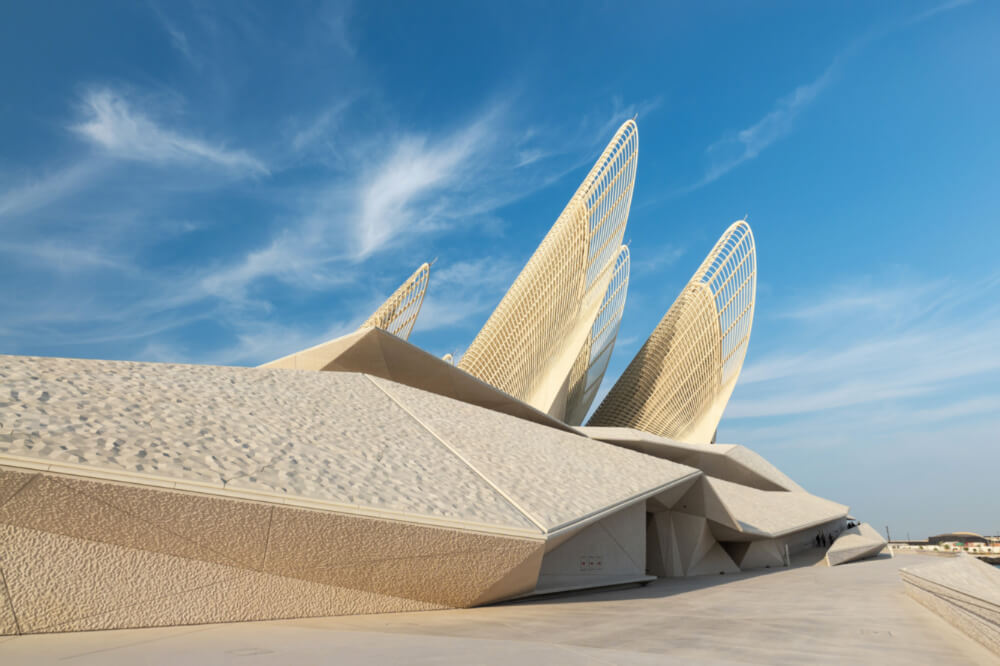
Zayed National Museum is one of the most recognizable examples of modern architecture in Abu Dhabi. The building was designed by Foster + Partners as part of the Saadiyat Cultural District. The design was created around five soaring steel-and-glass towers shaped like the wings of a falcon in flight. This is a symbol of Sheikh Zayed’s passion for falconry.
During the project presentation, Norman Foster described the concept as “inspired by the wing of a falcon in flight.” The towers also serve a practical purpose. They use natural ventilation principles inspired by traditional Emirati barjeel (wind towers). This system improves airflow and reduces energy consumption.
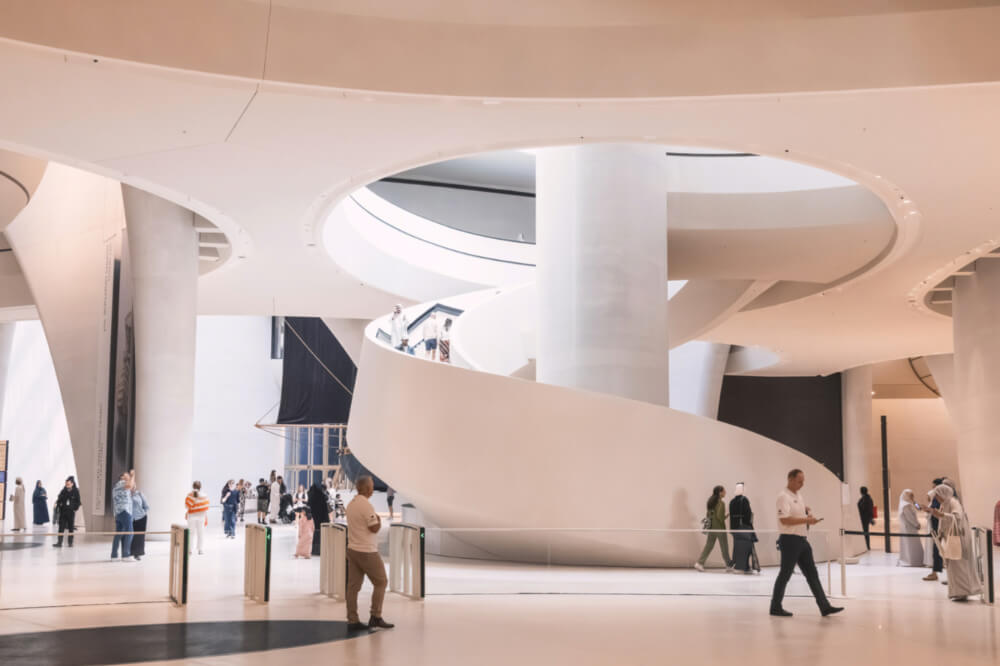
Inside, the museum’s central atrium creates a dramatic gathering space that connects different galleries and exhibition areas. The lighting, architectural details, and immersive installation elements are designed that way to make each exhibition space part of a larger storytelling experience about the UAE’s history and culture.
What to See Inside Zayed National Museum
Below is a brief guide to the must-see highlights at the Sheikh Zayed Museum: the permanent galleries, historical artifacts, and Al-Masar Garden. The museum presents the UAE’s story chronologically, from Neolithic settlements 8,000 years ago to the unification of the country in 1971.

Permanent Galleries
The museum has six permanent galleries.
- The “Our Oasis” gallery explores traditional life in the desert and oases, as well as how water and date palms sustained early communities.
- “Life from the Land” showcases the diversity of the UAE’s landscapes. Here, visitors can see firsthand how people have historically utilized these resources.
- The Falconry: Sheikh Zayed had a deep passion for falconry. This gallery highlights its role in diplomacy and national identity.
- People and Heritage: This gallery showcases the values, traditions, poetry, social structure, and history of maritime trade of the Emirati people.
- Sheikh Zayed: Life and Times: Of course, no visit would be complete without a separate gallery dedicated to the biography of the nation’s founder, his leadership, and the process of unifying the Emirates.
- Connections and Horizons: Explores how the UAE has historically interacted with its regional neighbors and global trade routes.
Historical Artifact Collection
In the museum’s exhibition halls, visitors can discover rare archaeological evidence of early human presence on the Arabian Peninsula, including tools and artifacts that reveal how people adapted to changing environments in ancient times. The collection also highlights the UAE’s cultural heritage through historic objects, documents, and personal items connected to the life and legacy of late Sheikh Zayed bin Sultan Al Nahyan.
Al Masar Garden
This garden tells the story of Sheikh Zayed and the UAE through nature. It is an immersive experience where you can walk through over 700 native trees and shrubs, and a traditional falaj-style water system running through the garden shows how ancient communities managed water resources. If you are tired and need a relaxing coffee break, there are a few cafes.
Best Time to Visit the Museum
Zayed National Museum is open year-round, but the most comfortable months to visit Abu Dhabi are:
- From October to April. During this period, the weather is cooler and outdoor activities are more pleasant.
- Plan your visit in the morning: The museum is usually less crowded
- The cooler season is ideal for exploring the area at a relaxed pace before or after visiting the museum.
- You can combine your trip with a walk around Saadiyat Island.
How to Get to Zayed National Museum
Zayed National Museum is located in the Saadiyat Cultural District Abu Dhabi. The museum is easy to reach from both downtown Abu Dhabi and the airport. Before you leave, check the museum’s opening hours to plan your visit.
- By taxi: Taxis are widely available throughout Abu Dhabi.
- By public transport: Several bus routes serve Saadiyat Island, although you may need a short walk or transfer (depending on your starting point).
- By rental car: A rental car opens up a world of possibilities for you. In fact, you can explore Abu Dhabi without relying on public transportation or spending money on taxis, since renting a car is often much cheaper. After visiting the museum, you can easily continue to the Louvre Abu Dhabi, Abrahamic Family House, the Corniche, or even Yas Island in a single day.
Why Renting a Car Is the Most Convenient Option
Usually, a museum is just one of many stops along a traveler’s route. It’s especially difficult to plan your trip and itinerary if you’re using public transportation or taxis. In this case, a car is not just a means of transportation, but also a space where you can rest, charge your phone, and leave personal belongings. That’s why many travel experts recommend renting a car, especially for first-time visitors who want to see more of the emirate at their own pace.
Many travelers choose to rent a car in Abu Dhabi to combine a visit to Zayed National Museum with other major attractions across the emirate. Octane Rent car rental company offers over 400 vehicles from various categories and famous brands. If you’re traveling alone, you can rent a compact sedan or coupe. If you’re traveling with your family, an SUV offers plenty of space for both passengers and luggage. And if you’re traveling with a group, a minivan is the right choice for you. In any case, Octane Rent offers every type of vehicle, including sports cars, exotic cars, electric vehicles, pickup trucks, and even camper vans.
Nearby Attractions Worth Visiting
The list of locations worth visiting if you are in Abu Dhabi and have already visited the Sheikh Zayed Museum includes:
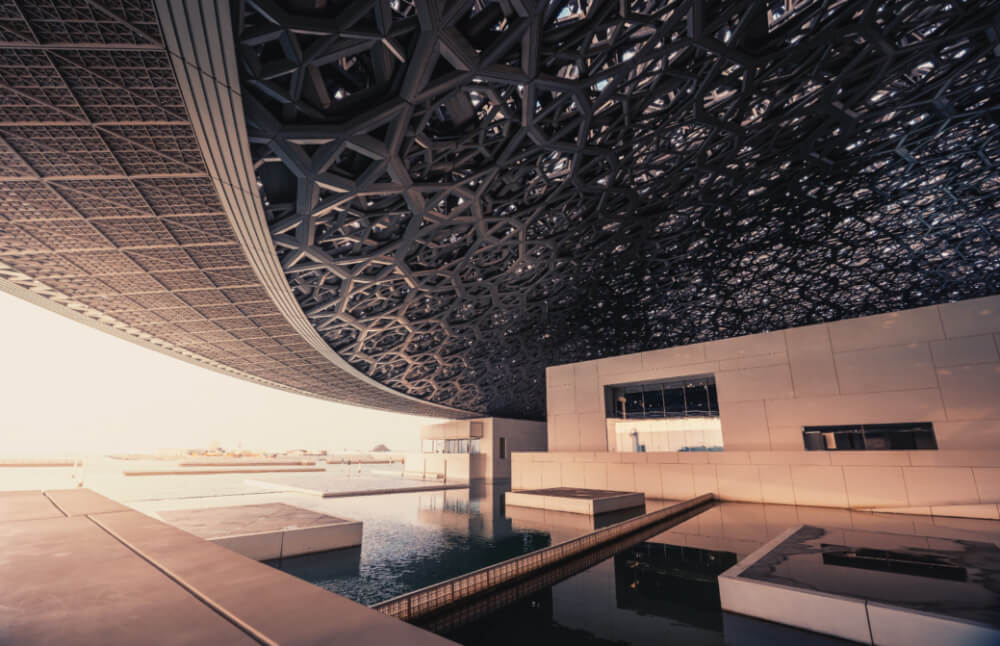
- Louvre Abu Dhabi: Whether you’re driving your own car or a rental car, the entire trip from the Sheikh Zayed Museum to the Louvre will take about five minutes. Louvre Abu Dhabi is one of the UAE’s most famous art museums, with masterpieces from different civilizations and time periods.
- Abrahamic Family House: In this unique cultural complex, you will find a mosque, church, and synagogue that promote interfaith dialogue. Get in the car, drive down Jacques Chirac Street, and you’ll be there in five minutes.
- Saadiyat Beach: If you want to enjoy the weather on the beach and relax after the Sheikh Zayed Museum, you are 5-10 minutes (by car) away from the Saadiyat Beach.
- teamLab Phenomena Abu Dhabi: An immersive digital art attraction. Here you’ll find light and water art installations, interactive art, and an exploration zone where visitors can learn about physical and digital concepts. From Zayed National Museum on Saadiyat Island, you can get there in about five minutes by car.
- Yas Island: This is a famous attraction. Here you can find various theme parks, go shopping, and visit waterfront attractions. From Zayed National Museum, the drive takes around 20-25 minutes (about 20 km) via Sheikh Khalifa Bin Zayed Highway.
- Natural History Museum Abu Dhabi: If you are interested in Earth’s history, prehistoric life, and the wonders of nature, this place is definitely worth checking out. It is also located on Saadiyat Island. From Zayed National Museum, you can get there in just 3-5 minutes by car.
If you have extra time, keep an eye on the upcoming Guggenheim Abu Dhabi, which is expected to become another leading museum of modern and contemporary art and another cultural landmark on Saadiyat Island.
Visitor Tips Before You Go
- Book tickets in advance: Reserve your tickets online. During weekends and public holidays, it is especially recommended to book them in advance.
- Check opening hours: Verify the latest schedule before your visit and look for available guided tours, including tours in Emirati Sign Language led by expert guides.
- Plan at least two or three hours to explore the galleries at a comfortable pace.
- Charge your phone, and bring power banks and chargers just in case, so you don’t run out of battery.
- Dress comfortably: Wear appropriate attire that covers your shoulders and knees, and remember that the museum has excellent air conditioning. It is recommended that you bring sunglasses and a hat so you don’t get too hot when you go outside.
- Bring a camera and plan your day: Don’t forget your camera, and combine your visit with other attractions in the Saadiyat Cultural District for a full-day itinerary.
Final Thoughts
If you want to immerse yourself in the country’s history and culture, don’t miss the Zayed National Museum. The museum collaborates with international institutions and preserves and presents the UAE’s heritage. To make the most of your trip, many travelers choose to rent a car in Abu Dhabi and combine their museum visit with nearby attractions such as Louvre Abu Dhabi, the Corniche, and Yas Island.
To avoid relying on public transportation and taxis, we recommend renting a car in Abu Dhabi. That way, you can plan your own trips to the Louvre Abu Dhabi and the Corniche without waiting for a taxi or standing at a bus stop. With Octane Rent, you can hire a vehicle for all budgets and preferences. If there are more than five of you, you can rent a 7-passenger SUV or minivan. For more compact and fuel-efficient trips, sedans and electric cars are available. Car rentals from our fleet are available for one day or longer.