













































- Key Takeaways
- Why You Can’t Pay Cash on Florida Toll Roads
- Three Ways to Pay Tolls in a Rental Car
- Main Toll Roads You’ll Actually Use in Miami
- How Much Tolls Really Cost on a Week in Miami
- Can You Just Avoid Toll Roads?
- What Happens After You Return the Car
- Tolls with a Rental Car in Miami: Practical Setup
- Toll Checklist Before You Start to Travel
- FAQ
In Florida, almost all toll roads are cashless. Many highway tolls in the Sunshine State are collected automatically, including those on Turnpike system roads, which operate without traditional toll booths. Electronic toll collection is managed by the Florida Department of Transportation. If you rent a car, you have three options:
- Transponder for rental
- Toll-By-Plate by license plate number
- Personal SunPass
If you want to buy a SunPass, note that there are two types of transponders.
- The SunPass Mini: It is a sticker that attaches directly to the windshield and stops working once removed. It costs $4.99 + tax.
- The SunPass PRO: A portable transponder that can be removed from one car and mounted on another. It costs $14.95 + tax and also works anywhere E-ZPass is accepted.
The difference in the total cost can be quite significant, so it’s best to compare all the rates in advance and choose the one that works best for you.
Keep reading this article to learn more about how it all works, the rates in detail, and how to avoid overpaying during your road trip in a rental car. This info is especially important if you plan to rent a car in Miami for the first time.

Key Takeaways
- SunPass is Florida’s Prepaid Toll Program. It allows drivers to pay tolls electronically from a prepaid account.
- Toll roads are well-maintained and are generally safer.
- You won’t find any booths that accept cash. As a general rule, cash is not an accepted payment method on Miami’s toll highways. Nearly all of them now operate as cashless, all-electronic systems.
- Toll-By-Plate is more expensive than the toll itself due to a surcharge.
- Car rental companies charge a daily service fee for the transponder, even on days when you don’t drive.
- Bills arrive weeks after you return the auto. The rental company usually bills for tolls a few weeks after the car is returned. These charges may be billed separately from the rental fee. For example, they may be deducted from the refundable deposit.





Why You Can’t Pay Cash on Florida Toll Roads
Traditional toll booths for cash payments have been removed, as Florida has almost entirely switched to All-Electronic Tolling (AET). This was done to reduce traffic jams, as well as to save on maintenance costs, since these booths are quite expensive to maintain.
If you drive through a toll point without a transponder, a camera captures your license plate, and the toll is automatically processed through TOLL-BY-PLATE. The transaction is recorded automatically, so the driver cannot simply pass a toll point without being charged. If you use express toll lanes, the same electronic system records the trip and calculates the applicable toll. This is especially important if you’re a visitor from another country, since even the standard route from Miami Airport to the city almost inevitably passes through the toll sections of SR 836 (Dolphin Expressway) or SR 112 (Airport Expressway). You may be caught off guard when you receive a toll bill. In fact, you may receive a bill even after you’ve returned the rental car. The company may either simply send you a receipt or deduct the amount from your security deposit.
Therefore, it is very important to review the official information on toll rates and rules on the Florida’s Turnpike Enterprise website (floridasturnpike.com) and the Greater Miami Expressway Agency (GMX) website (gmx-way.com).
Three Ways to Pay Tolls in a Rental Car
| Option | How it works | What You’re Overpaying For | Who is it for? |
|---|---|---|---|
| Rental Transponder | The car already has a transponder or is registered in the rental company’s toll system. Tolls are charged automatically. | A daily service fee charged by the program operator. Doesn’t matter how many times you actually use a toll road. | If you don’t have your own car or transponder, plan a short-term rental or occasional trips. |
| Toll-By-Plate | A camera captures the license plate, and the bill is sent by mail to the registered owner. In this case, the rental company then charges you. | A rate higher than the standard electronic toll, usually about 1.5-2 times higher, + a separate administrative processing fee. | If you accidentally used a toll road but didn’t have a transponder or a special rental company toll program. |
| Your own SunPass Mini | The transponder is linked to the rental vehicle’s license plate for the rental period, and tolls are deducted from the prepaid balance at the lowest rate. | The cost of the device. | If you plan a long-term rental and to trip frequently on toll roads as well as traveling outside Miami |
For most rental companies, the transponder service fee is charged for each day of the rental, not for the days on which the toll road is actually used, so for a monthly car rental involving just one trip on a toll road, it ends up being ridiculously expensive.
- SunPass Mini (windshield sticker, single-use): $4.99 according to the official SunPass.com website. Also sold at Publix, CVS, Walgreens, all AAA locations in Florida, and at Florida’s Turnpike gas stations and stores.
- SunPass PRO (portable, can be transferred between vehicles): $14.95.
- SR 836 (Dolphin Expressway): According to Florida’s Turnpike/AARoads, for a passenger car with SunPass, the base toll on this section is approximately $2.26, while Toll-By-Plate is approximately $4.52.
- Hertz (PlatePass program): The company’s terms and conditions specify a daily service fee of $9.99 for each calendar day on which tolls were incurred, plus the toll itself at the maximum non-discounted rate. Before your trip, it’s worth checking the current rate in your rental agreement, as it varies by state and pickup location.
- Avis (e-Toll program): All Avis vehicles in Florida are equipped with an electronic toll collection system. With the standard e-Toll option, you pay a $6.95 service fee for each day when you use a toll road, up to $34.95 per rental period, plus the toll at the maximum non-discounted rate. The e-Toll Unlimited option is also available for a daily fee, depending on the pickup location. Toll charges may appear on your bill 4-8 weeks after the rental ends.
- Enterprise (TollPass program): a service fee of $4.95 for each day of toll road use, with a maximum of $34.65 for the rental period, plus the toll itself.
Main Toll Roads You’ll Actually Use in Miami
- SR 836 / Dolphin Expressway. A toll road connecting Miami International Airport with central and western parts of Miami and Florida’s Turnpike. It is an important route for drivers traveling across the Miami region.
- SR 112 / Airport Expressway. A toll road from the MIA area to I-95 and Miami Beach via I-195. It provides a direct connection between the airport and major interstate routes.
- Florida’s Turnpike (SR 91). A toll highway that goes north from Miami-Dade through Broward County and further toward Orlando. There are several service plazas along the route where drivers can stop for fuel, food, and a short break. The southern part of the system, HEFT (SR 821), runs through Miami-Dade to Florida City.
- SR 826 / Palmetto Expressway. Mostly a free highway through western Miami-Dade. Some express lanes may have tolls. This road can be busy during peak traffic hours, so drivers should allow extra travel time.
- Rickenbacker Causeway. A toll route to Key Biscayne and Virginia Key, with payment made when entering. The route crosses a bridge and is a popular way to reach these coastal areas. Since October 1, 2025, the toll for a two-axle vehicle is $3.25 with SunPass and $6.50 with Toll-by-Plate, plus a $2.50 monthly invoice fee.
- SR 874 / Don Shula Expressway and SR 878 / Snapper Creek Expressway. Toll expressways in southern Miami-Dade that serve the Kendall area and connect it with US-1. They are useful for getting around the southern part of the region without relying only on local roads.
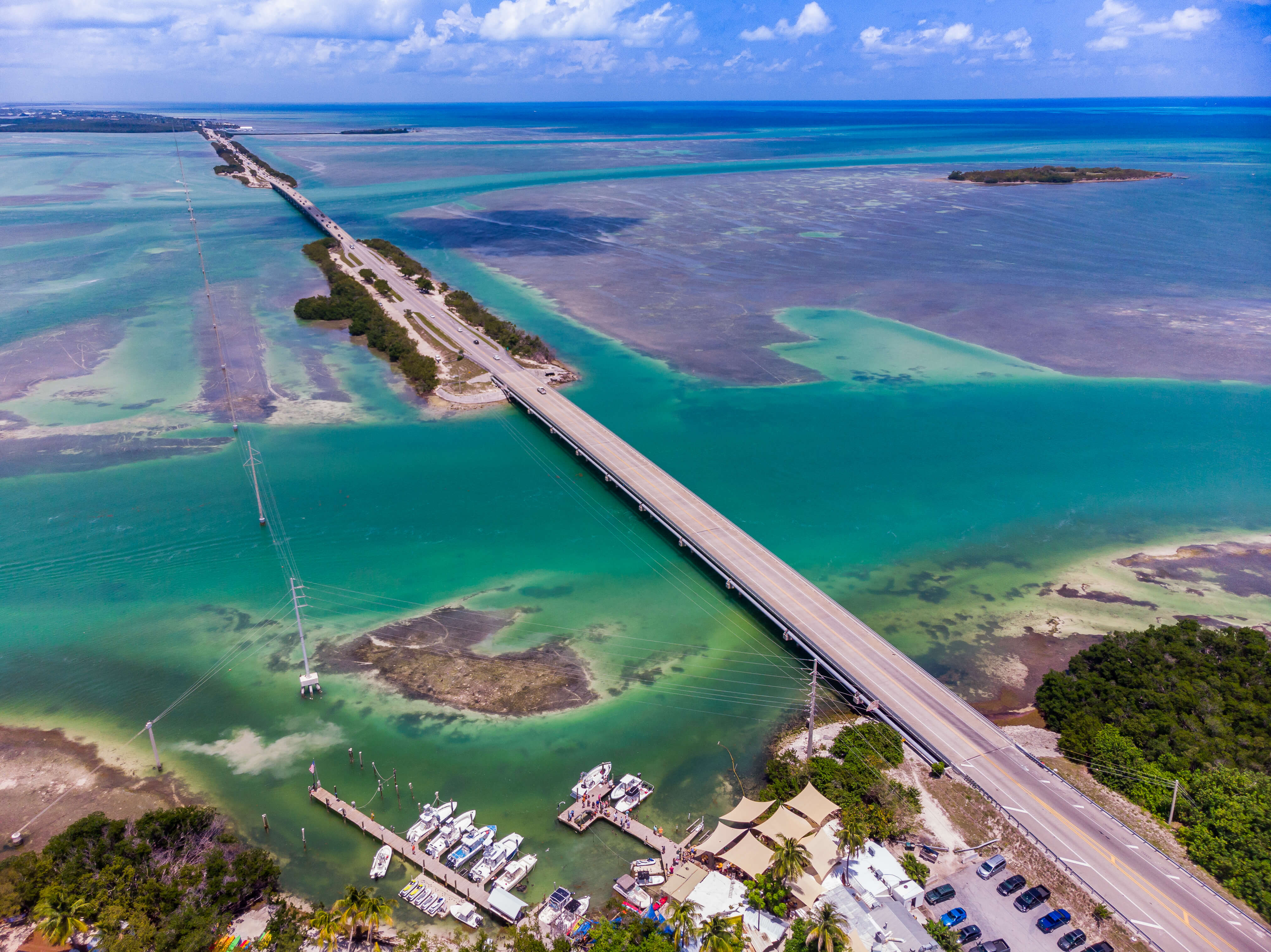
- U.S 1 to Key West. A free route with no toll points. However, an alternative route via Card Sound Road includes the paid Card Sound Bridge. Since October 1, 2025, the toll for a vehicle that has two axles is $2.13 with SunPass or $3.18 with Toll-by-Plate, plus a $2.50 monthly administrative fee for Toll-by-Plate.
How Much Tolls Really Cost on a Week in Miami
Let’s look at prices using a hypothetical example. Let’s say you’re in Miami for a week, and your basic itinerary is: the airport, Miami Beach, then Wynwood, then Key Biscayne, and you’re driving back to the airport with several round trips via SR 836/SR 112 and the Rickenbacker Causeway.

It’s very important to note that the figures below are approximate, just to give you an idea of the order of magnitude. Keep in mind that the exact price depends on the number and timing of your trips, the car class, and the rental company’s rates at the time of booking. You’ll need to clarify all of this in advance.
- With your SunPass: Tolls at a discounted rate (usually between $15 and $25 per week of active travel around the city, plus a one-time transponder fee of $4.99 for the Mini).
- With the daily-rate rental plan: The same tolls at the maximum rate plus a service fee for each day you drive. With 4-5 active days per week, this adds approximately $20-35 on top of the tolls.
- Under the unlimited rental plan: A fixed amount for the entire week regardless of the number of trips. The amount can range from $54.95 to $181.93 per week depending on the pickup location, which, for a small number of trips, turns out to be significantly more expensive than the other two options.
Can You Just Avoid Toll Roads?
It’s partially possible. There are free alternatives. For example, US-1, Biscayne Boulevard, and local streets instead of expressways. But keep in mind that during rush hour, the extra travel time can be significant, especially if you’re planning to travel between the airport and the beaches.
In Google Maps and Waze, you can enable a special option that lets you avoid toll roads. You can do this in the route settings before starting your trip. By the way, this is the easiest and fastest way to check how much extra time a free detour will add and weigh the pros and cons.
You should also be especially careful on the I-95 express lanes: they have a variable toll that changes throughout the day depending on traffic, and it’s easy to accidentally merge into one of these lanes. These lanes have a variable toll that changes depending on traffic, so it’s easy to pay more than expected if you enter them.
What Happens After You Return the Car
It’s crucial to understand this before you pick up the car. Toll charges and any fines for driving without paying are billed to the rental company with a delay and then charged to the card linked to the rental agreement, after the rental has been formally closed. Here’s what to expect:
- The charge is typically processed 2-8 weeks after the rental ends; timeframes vary by company, so it’s worth clarifying this at the counter.
- The bill almost always includes a separate line item for an administrative/service fee. This is not included in the rental price and does not appear on the final receipt at pickup.
- You can verify the charge using the vehicle’s license plate number and the date of the trip. Most toll operators, including GMX (Greater Miami Expressway Agency), let you look up a bill by plate number, and the rental company can do the same.
- If the charge appears to be incorrect or duplicated, contact the rental company (or its toll partner) first rather than the highway authority, since the bill is issued to the company as the vehicle’s owner.
Note that these charges are not always taken from the card as a fresh payment — depending on the company’s policy, the amount may instead be withheld from your security deposit when it is released.
Tolls with a Rental Car in Miami: Practical Setup
If the car is delivered directly to MIA/FLL Airport or to your hotel, the transponder or registration for the toll program is usually already set up in advance. We recommend clarifying the toll payment plan at the time of booking, rather than at the rental counter. This way, you can compare options and choose the right rate. Some companies clearly display the exact cost of the toll program and its terms even before you pay for your reservation. For example, with Octane Rent, you can get this information in advance from a manager when confirming your order or by contacting customer support, which is available 24/7 for assistance.
If your rental is for a month or longer and you’ll be using toll roads regularly, it’s usually more cost-effective to activate your own SunPass Mini and link the rental car’s license plate number to it for the duration of your trip. This is much more cost-effective than paying the rental company’s daily service fee for the entire month.
Read more about how to rent SUV in Miami.

Toll Checklist Before You Start to Travel
- Ask the car rental company’s manager if the car has a toll device.
- Check in advance how the service charge is calculated.
- Make sure the device is active or ask if it’s stored in a closed case.
- Take a photo of the license plate and odometer when you receive the car.
- If you use your own SunPass, link the rental car to your account only for the rental period.
- Make sure your SunPass balance is enough to cover your trips.
- Make sure your credit card details are up to date if they are linked to the toll account.
- Save the rental company’s phone number in case you have questions about toll charges.
- Keep your rental ID and documents until all tolls have been charged.