






























- QUICK GUIDE — Main Points in 30 Seconds
- What Defines the Mercedes Benz E-Class Legacy
- Overview of Mercedes-Benz E-Klasse Generations
- W211: Safety and Comfort Revolution
- Modern Mercedes-Benz E-Class Lineup — Key Models Explained
- Evolution of Interior Quality and Technologies
- Safety Improvements Across Mercedes-Benz E-Class Generations
- Why the Mercedes-Benz E-Class Remains a Luxury Sedan Icon
- E-Class as a Benchmark of Luxury
- FAQ
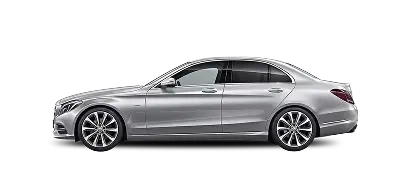
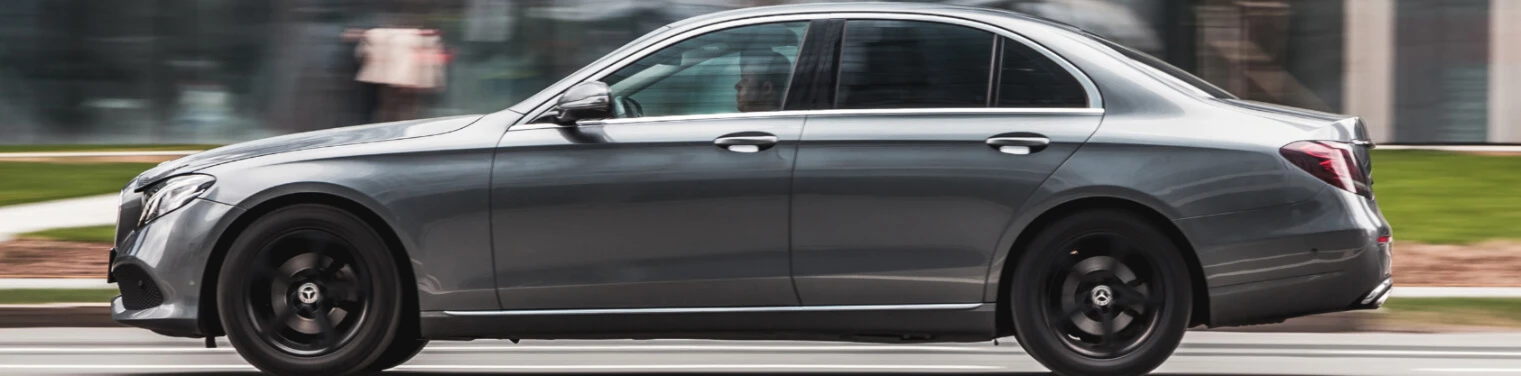
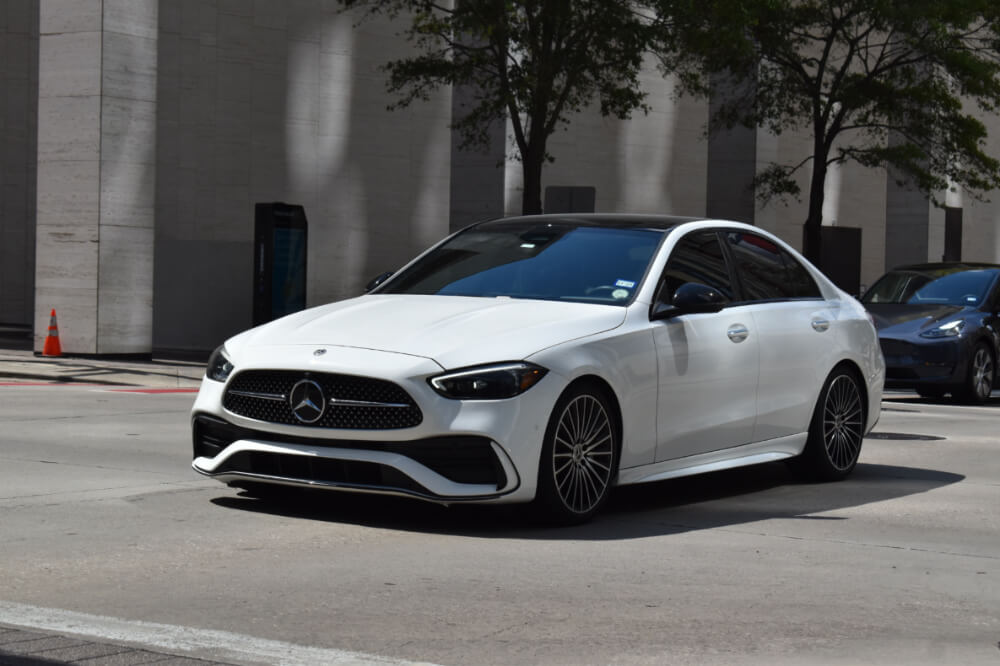
The Mercedes-Benz E-Class is a leading executive sedan and global icon in the mid-size luxury sedan segment. For over seven decades, it has shaped the Mercedes-Benz lineup of sedans and passenger cars through continuous innovation across its generations.
Mercedes-Benz developed the E-Class with rigorous engineering in post-war Germany. Each generation of the Mercedes-Benz E-Class introduced new innovations. Current Mercedes-Benz sedan models, such as the efficient E 200, versatile E 300, all-wheel-drive E450, and AMG-powered E53 (similar to past models like E 63 AMG and E 55 AMG), feature plug-in hybrid variants, semi-autonomous driving, and driver assistance systems.
In Dubai, these cars perfectly suit affluent renters navigating city streets and highways, combining comfort, prestige, and modern technology – an ideal choice when you rent Mercedes in Dubai within the luxury segment.
QUICK GUIDE — Main Points in 30 Seconds
- Mercedes-Benz E-Class: Business segment gold standard. Mercedes’ enduring benchmark for Mercedes-Benz E-Klasse excellence.
- E-Class generations hallmarks: Progressive leaps in safety features, sumptuous comfort, and boundary-pushing technologies like advanced safety features and lane keeping assist.
Mercedes-Benz lineup’s modern powertrains:
- E 200: Thrifty turbocharged elegance for urban efficiency.
- E 300: Refined power with upscale poise.
- E450: 4MATIC mastery for premium dynamics.
- E53 AMG: Ferocious sport-luxury car beast.
- Dubai rental rationale: Epitome of comfort and prestige amid UAE’s luxury segment lifestyle. Remains a benchmark for luxury.
What Defines the Mercedes Benz E-Class Legacy
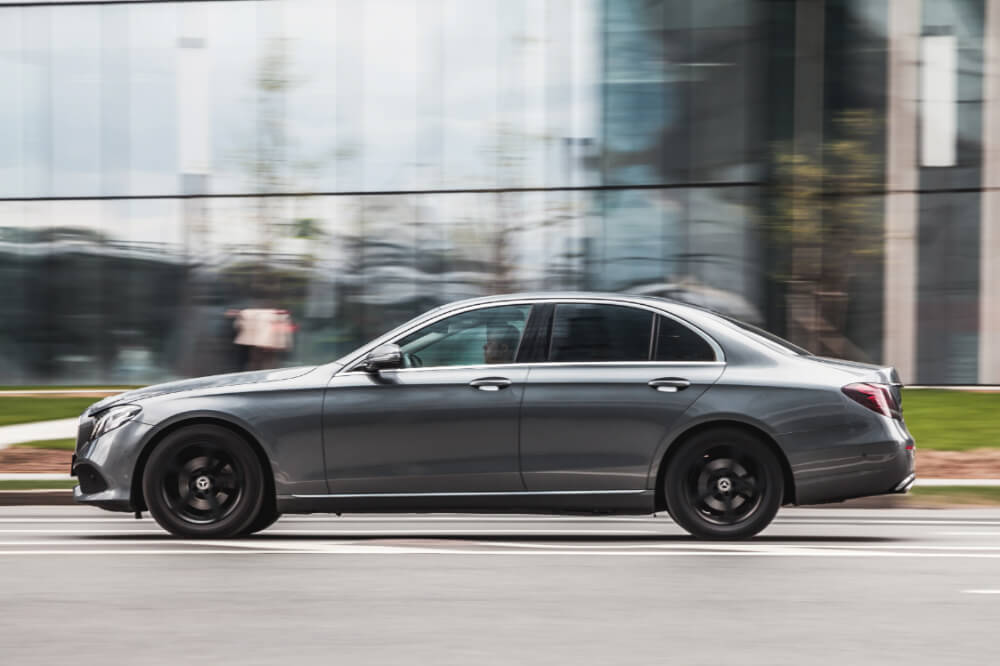
Under the iconic nameplate, the Mercedes E-Class legacy includes these key aspects:
- Comfort: Stratospheric comfort levels for long drives.
- Build quality and reliability: Unyielding standards, with many Mercedes-Benz W123 units exceeding 1 million km.
- Materials: Handcrafted premium options like Nappa leather and Burmester audio.
- Safety features: Trailblazing systems from the first crumple zones to AI-driven autonomy.
- Engines and powertrains: Expansive range of engines, engine options, and powertrain options, including diesel engines, V8 engines, V6 engines, turbocharged mills, and plug-in hybrid setups with automatic transmission.
This versatility covers high-performance models like the rare Mercedes-Benz 500 E and Mercedes-Benz 500 e (a stealth performance model with high-performance E 500 traits). It establishes the E-class sedan as the top choice in the Mercedes-Benz USA market and worldwide.
Overview of Mercedes-Benz E-Klasse Generations
The Mercedes-Benz model lineage traces from sturdy predecessors like W110 to silicon-infused marvels in the new E-Class. Mercedes-Benz launched these eras, each marked by significant production and design milestones:
| Generation | Production Years | Key Milestone |
|---|---|---|
| Pre-E-Class Era (W120/W110/W114/W123) | 1953–1985 | Reliability foundation; over 2.7M W123 units |
| W124 (First Official E-Class) | 1984–1995 | Official E-Class nameplate debut; cult classic |
| W210 | 1995–2002 | “Four-eyed” headlights; early electronics |
| W211 (Fourth Generation) | 2002–2009 | Pre-Safe safety revolution; Airmatic suspension |
| W212 | 2009–2016 (facelift 2013) | LED design language; expanded engine lineup |
| W213 | 2016–2023 (facelift 2020) | Digital cockpit; semi-autonomous driving |
| W214 (Current) | 2023–present | Hyperscreen; plug-in hybrid powertrains |
Pre-E-Class Era: W110, W120, W114, Mercedes-Benz W123
Mercedes-Benz introduced these as predecessors, nicknamed “Ponton,” “Stroke-8,” and the indestructible Mercedes-Benz W123. They prioritized tank-like durability with diesel engines, brake systems, and electronic stability program precursors. The W123, a model line cornerstone, epitomized “classic Mercedes-Benz” with robust inline-six powertrains and ladder-frame resilience. Mercedes-Benz produced over 2.7 million, laying the reputational bedrock.
Mercedes-Benz W124: The First E-Class. Cult Icon of Endurance
The Mercedes-Benz W124 received the E-Class nameplate in the 1993 Mercedes-Benz era. It featured aerodynamic design language, rust-resistant galvanized steel, and mechanical purity. The legendary 300D diesel engine achieved over 1,000,000 km lifespan, with range of engines from 2.0L to V8 engine. Mercedes-Benz offered the Mercedes-Benz 500 E, which featured a 5.0L V8 engine and 326 hp. Over 2.7 million units sold, as Mercedes-Benz used simple powertrains that proved sedans could last a long time.
W210: Technological Move Forward (Mercedes-Benz Evolution)
The W210’s signature “four-eyed” headlight design signaled a digital dawn, with xenon lights, more electronics (early CAN-bus), and airier cabins via multi-link suspension. Comfort surged with build quality upgrades, yet rust issues tempered its shine. Mercedes-Benz produced 1.65 million W210 units. This model bridged the transition from analog to electronic systems in the Mercedes-Benz lineup.
W211: Safety and Comfort Revolution
Airmatic adaptive suspension smoothed imperfections, while Pre-Safe (world’s first anticipatory safety features), electronic stability program (ESP), brake assists, and seven airbags redefined protection. Sumptuous wood/leather interiors and quieter ride (via acoustic glass) made long hauls sublime. The E 63 AMG (Mercedes-Benz also) introduced AMG performance features in this generation of the E-Class.
W212: Precision Design and Modernization
Angular, wind-cheating lines (Cd 0.25) housed Comand NTG multimedia, BlueTEC diesel engines, and hybrid previews. Engine options ballooned to 20 powertrains, from frugal 2.1L turbocharged to twin-turbocharged V8 engines (E 55 AMG, high-performance icons). A facelift (2021 Mercedes-Benz) sharpened design language, with sales topping 1 million.
W213 E-Class: Digitalization and Intelligent Driving
Twin 12.3-inch widescreen displays, Drive Pilot semi-autonomous driving, lane keeping assist, and EQ Boost mild-hybrids slashed emissions. The E63 S AMG hit 612 hp (came with a more powerful V8 engine). Over 1.3 million units were sold, including plug-in hybrid powertrain options, which underscored its luxury car appeal.
W214: New Generation of Mercedes-Benz E-Class Sedan
Mercedes-Benz launched the W214 in 2023, with superscreen (up to 56 inches), third-gen MBUX AI, plug-in hybrid variants (e.g., E 200 CGI/E 300e: 25 km electric range, V6 engine assists), and 360° LiDAR advanced safety features/driver assistance. Sharper design language and 20% stiffer chassis amplify poise. The W214 serves as the current model in modern Mercedes-Benz E-Class lineups.
Modern Mercedes-Benz E-Class Lineup — Key Models Explained
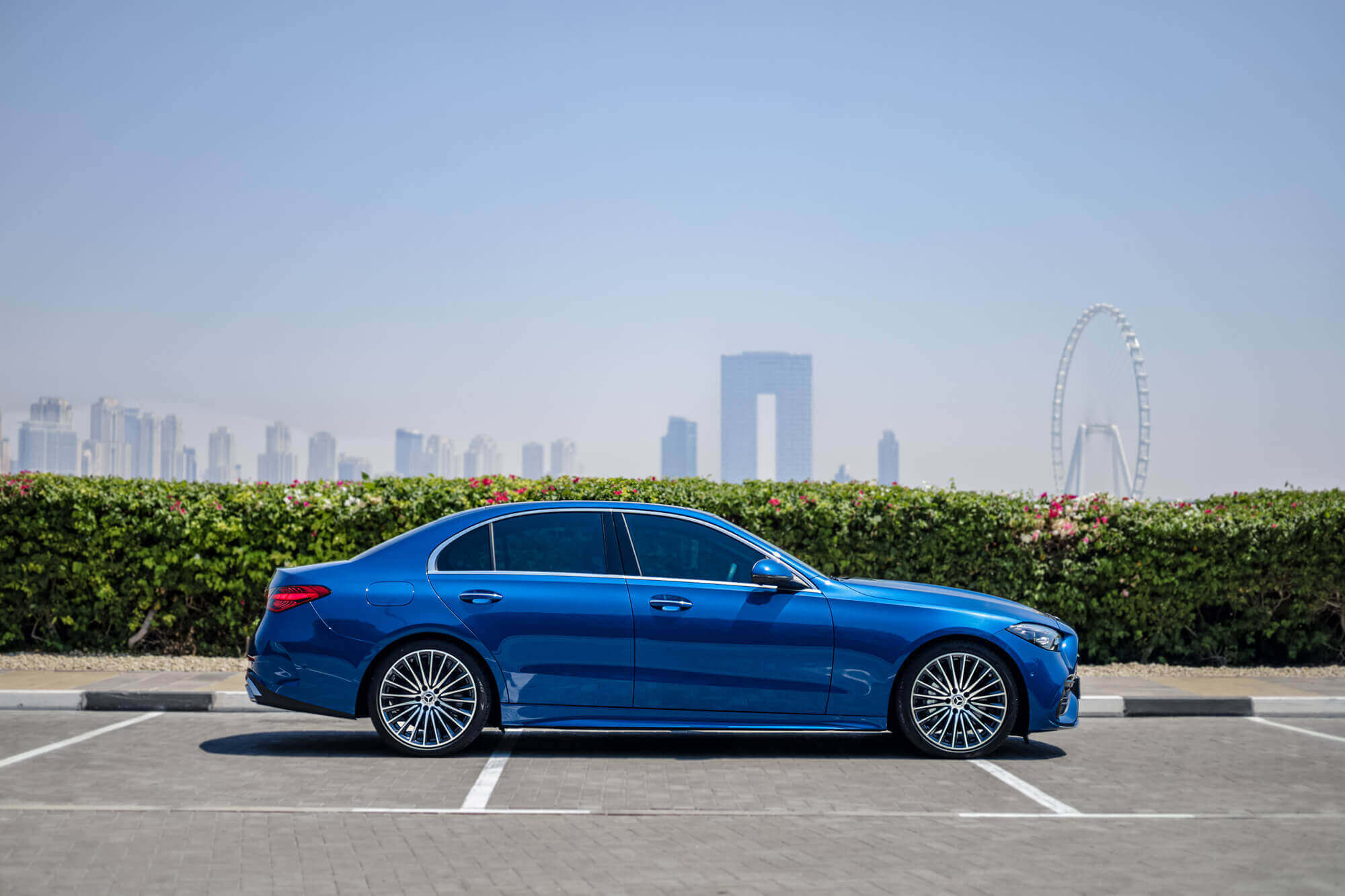
The modern Mercedes-Benz E-Class lineup combines luxury, technology, and performance, offering a range of models tailored for comfort-focused driving, dynamic handling, and advanced safety. Each version balances premium design with everyday usability for different driving needs.
Mercedes-Benz E 200. Efficient and Stylish Business Sedan
A 2.0L turbocharged mild-hybrid (E 200 CGI, 204 hp, 320 Nm) sips 6.5 L/100km via 9G-automatic transmission, gliding effortlessly. Ideal for Dubai’s traffic, the E200 offers entry-luxury segment pricing with generous executive space and MBUX infotainment. The E-class was launched as a new model staple.
Mercedes E 300. Balanced Power and Luxury
Upping to 258 hp/400 Nm (came with a more powerful setup), the E 300 accelerates 0-100 km/h in 6.4s with Multicontour seats, Burmester 4D, and Airmatic. It strikes the executive sweet spot – poised powertrain without excess.
Mercedes E450. Premium Performance and 4MATIC
A 3.0L inline-six mild-hybrid (375 hp/500 Nm, V6 engine base) with 4MATIC+ conquers UAE roads, hitting 100 km/h in 4.9s. Opulent trims ensure high-speed serenity.
Mercedes E53 AMG. The Sporty Side of the E-Class Sedan
AMG’s 3.0L turbocharged with EQ Boost (449 hp/520 Nm, 0-100 in 4.5s) roars via valved exhaust and adaptive dampers. The E53 AMG combines performance model power with E-Class comfort and refinement.
Evolution of Interior Quality and Technologies
Analog dials yielded to TFT hyperscreens, burl wood to illuminated trims. Ergonomics refined via zero-gravity seats, while MBUX 3.0 predicts driver needs through large 27-inch displays in the Mercedes-Benz E-Klasse.
Safety Improvements Across Mercedes-Benz E-Class Generations
| Era | Advanced Safety Features |
|---|---|
| Early (Predecessor) | Crumple zones, brake basics |
| 2000s (W211) | ESP, Pre-Safe |
| 2010s (W212) | Adaptive Cruise, lane keeping assist |
| Now (W214) | 360° cams, LiDAR, semi-autonomous driving, driver assistance |
Mercedes-Benz introduced these, halving fatality risks across E-class generations.
Why the Mercedes-Benz E-Class Remains a Luxury Sedan Icon
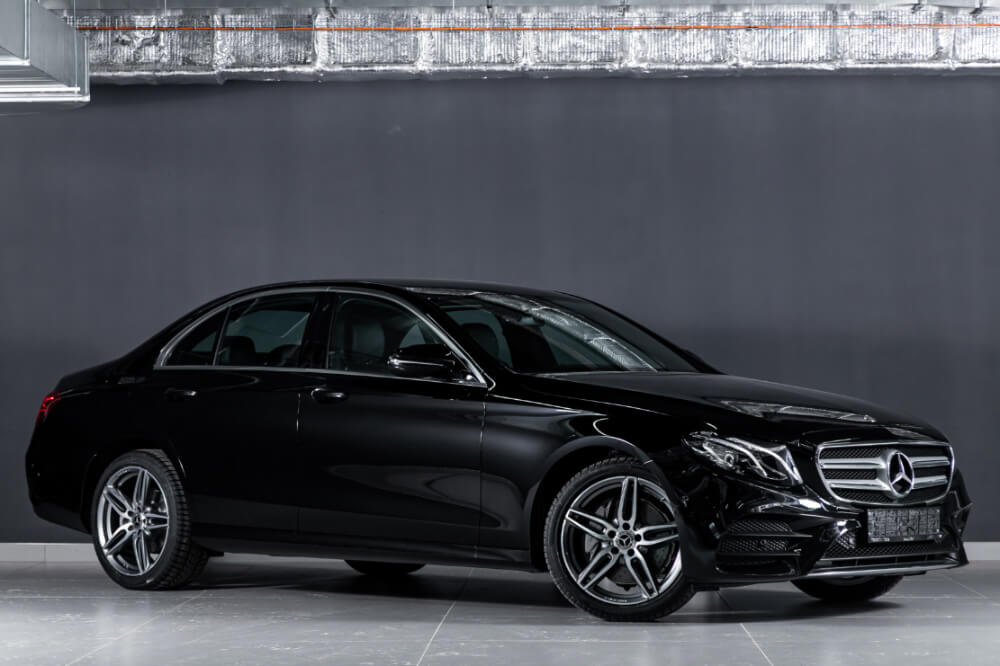
The Mercedes E-Class combines a soft ride with precise handling, Mercedes-Benz brand prestige, million-km build quality, and versatility for business or family use. It remains a benchmark for luxury.
Experience the range from E 200 efficiency to E53 AMG performance at Octane.Rent in Dubai. Fresh W214s include full insurance with delivery and instant booking.
E-Class as a Benchmark of Luxury
Mercedes-Benz E-Class evolved from the W123 generation to the W214 generation. Models like E 200, E 300, E450, and E53 AMG meet different needs. These models, produced by Mercedes-Benz, maintain their position as leading premium sedans through consistent innovation and build quality.